Smart hotel pricing reduces reliance on OTAs and their commissions by prioritising direct sales with rates and availability managed in real time. Revenue management applied to distribution lets you recover margin without losing occupancy: it's about deciding when, where and at what price to sell each room.
The problem isn't being on OTAs; it's relying on them to fill the hotel every night. The commissions they charge — typically between 15% and 25% — erode the profitability of each booking. Add to that the pressure on rates, and the result is a business working harder to earn less. The solution isn't to abandon indirect channels, but to manage your distribution mix wisely. And that's where smart pricing makes all the difference.
Why smart hotel pricing is the foundation for reducing OTA commissions
Traditional revenue management focused on adjusting prices according to demand. Smart pricing goes a step further: it uses internal and external data to recommend the optimal rate for each channel at any given moment. When a hotel has a clear pricing strategy, it can decide which channels to work with and on what terms. For example, if occupancy is forecast to be high for a specific date, there's no point giving rooms away to an OTA at a 20% commission. Better to steer that demand towards the direct channel, where the acquisition cost is lower.
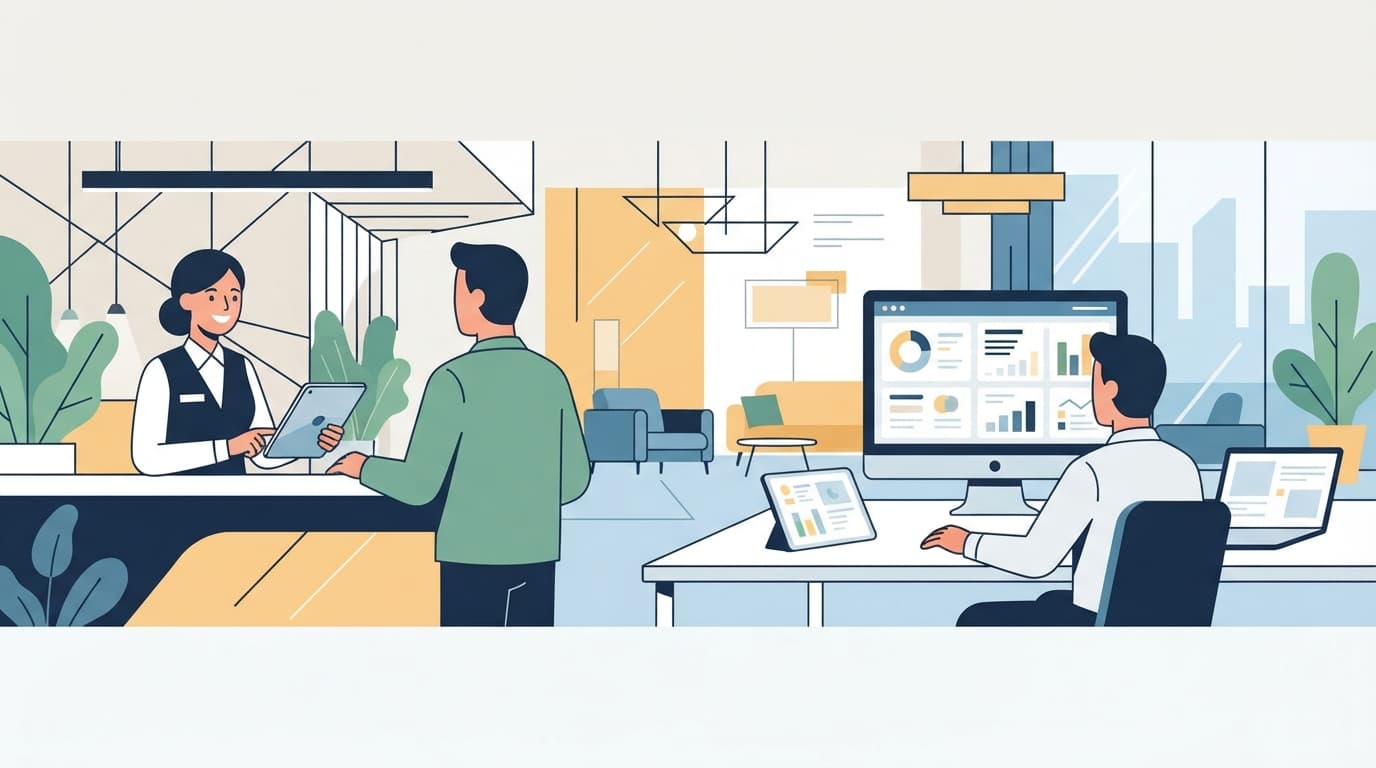
This is where a platform like Avirato adds value: by unifying PMS, channel manager and revenue management, hoteliers can see how each channel is performing on a single dashboard and adjust rates and availability in real time. It's not about guessing; it's about deciding with information.
From manual pricing to smart pricing: what changes in day-to-day operations
Many hotels still update rates by hand, spreadsheet at the ready. That limits reaction speed and leads to errors: outdated rates, overbooking or poorly synchronised availability. Smart pricing automates much of that work. The system suggests prices based on predefined rules, expected demand and market behaviour. Hoteliers can accept, adjust or ignore those recommendations, but the heavy lifting is already done.
With Avirato, revenue management integrates with the channel manager. That means any rate change automatically propagates to all connected channels, including your own website. So the hotel can maintain a consistent pricing policy and avoid disparities that harm direct conversion.
Data for decision-making: what information smart pricing needs
- Occupancy and rate history: to spot demand patterns and anticipate them.
- Pickup by channel: how much each OTA contributes and the real cost of each booking.
- Competitor behaviour: rates on public channels, though not always accessible.
- Events and seasonality: trade fairs, holidays, high or low season.
- Lead time and length of stay: to adjust restrictions and promotions.
With this data, the hotel can define rules that prioritise the direct channel during periods of high demand or limit availability on OTAs when the forecast is strong. This structurally reduces reliance on intermediaries.
How smart pricing reduces OTA commissions without losing occupancy
The key lies in the channel mix. If the hotel offers a price on its website that is equal to or better than the OTAs, informed customers will book direct. For that, rate parity is essential. Smart pricing helps maintain that parity without sacrificing margin: it lets you set competitive prices on the direct channel, taking advantage of the lack of commission, and adjust availability on OTAs so as not to cannibalise demand.
A practical example: a city hotel with good business demand midweek. It can configure the system so that on Wednesdays and Thursdays, when expected occupancy exceeds 80%, availability is closed on OTAs with high commissions and sales are redirected to its own website. Customers coming via OTA will see the room as sold out, but on the hotel's website it remains available at the same price. The hotel gains margin without losing the sale.
Avirato lets you automate these distribution rules within its revenue management module. This way, hoteliers don't have to keep an eye on every channel; the system applies the defined strategy.
Common mistakes when trying to reduce OTA commissions
- Slashing rates on your website without control: if the direct price is much lower than on OTAs, it breeds distrust and you lose margin.
- Closing OTAs altogether: except in extreme cases, eliminating channels reduces visibility and occupancy; better to limit availability by date or room type.
- Not measuring the real cost per channel: commission isn't the only cost; you must add management time, issues and cancellations.
- Forgetting the direct channel in your pricing strategy: if your website doesn't have attractive rates, customers will keep booking on OTAs.
Avoiding these mistakes is easier with a system that centralises information and lets you act quickly.
Steps to implement smart hotel pricing that reduces commissions
- Audit your current channel mix: calculate the real cost of each OTA and the percentage of direct sales.
- Set clear goals: do you want to reduce reliance on a specific OTA? Increase direct sales by 10% in six months?
- Configure pricing and availability rules: in Avirato, these rules are applied automatically with the integrated channel manager.
- Activate the direct booking engine: commission-free and with integrated payment gateway, it's the natural complement to smart pricing.
- Measure and adjust: review channel performance weekly and modify rules based on results.
Automation doesn't eliminate the need for hotelier judgement, but it frees up time to focus on what really matters: the guest and the strategy.
Comparison table: sales channels by cost and control
| Channel | Cost per booking | Control over rate and availability | Impact on margin |
|---|---|---|---|
| Own website with booking engine | Zero commission (payment gateway only) | Total | High (maximum margin) |
| OTA with standard commission | 15% - 25% | Partial (depending on contract) | Reduced |
| OTA with preferred programme | 25% - 30% | Limited (visibility in exchange for commission) | Low |
| Telephone / direct sales | Minimal (staff cost) | Total | High |
The table shows why it pays to boost the direct channel. Smart pricing helps make that channel competitive without sacrificing revenue.
Smart pricing and loyalty: the virtuous circle
When a guest books direct, the hotel obtains their data and can communicate with them before, during and after their stay. That allows you to offer upgrades, send personalised offers and build loyalty. Next time, that guest will book direct again, bypassing OTAs. This is how you build your own customer base that reduces reliance on intermediaries and acquisition costs. Avirato includes email marketing and guest management to seize this opportunity.
Smart pricing isn't a fad or a luxury for big chains. It's a management tool that any hotel can adopt to improve profitability. And the first tangible result is usually a reduction in OTA commissions, because you learn to sell better on the channels that suit you most.
If you want to see how a unified PMS, channel manager and revenue management system can help you reduce commissions and boost margin, request a free Avirato demo. We'll show you in 30 minutes how it works and what results you can expect for your type of accommodation.
Frequently asked questions
How can smart pricing reduce OTA commissions?
By automating rate and availability management, the hotel can prioritise the direct channel during periods of high demand, limit exposure on OTAs with high commissions and maintain rate parity so its own website is competitive. This reduces reliance on intermediaries and improves margin per booking.
What data does a hotel need to apply smart pricing?
Occupancy and rate history, pickup by channel, competitor behaviour, local events and patterns of lead time and length of stay. With that information, the system suggests optimal prices and availability rules by channel. Avirato integrates this data into its revenue management module.
Is it necessary to close OTAs to reduce commissions?
No. The recommended strategy is to keep OTAs, but with control over availability and rates. For example, you can limit sales on certain channels when direct demand is high, or close only specific room types. The goal is to balance the mix, not eliminate channels.
What role does the direct booking engine play in reducing commissions?
It's the natural complement to smart pricing. A commission-free booking engine (like Avirato's) lets you capture demand redirected from OTAs or search engines, with controlled rates and integrated payments. The more direct bookings, the lower the average cost per booking.
How long does it take to implement a smart pricing strategy?
It depends on your starting point. With a unified platform like Avirato, the initial setup of rates, rules and channels can be done in a few days. After that, the system learns and adjusts recommendations; hoteliers should review and fine-tune the strategy continuously, especially at the beginning.